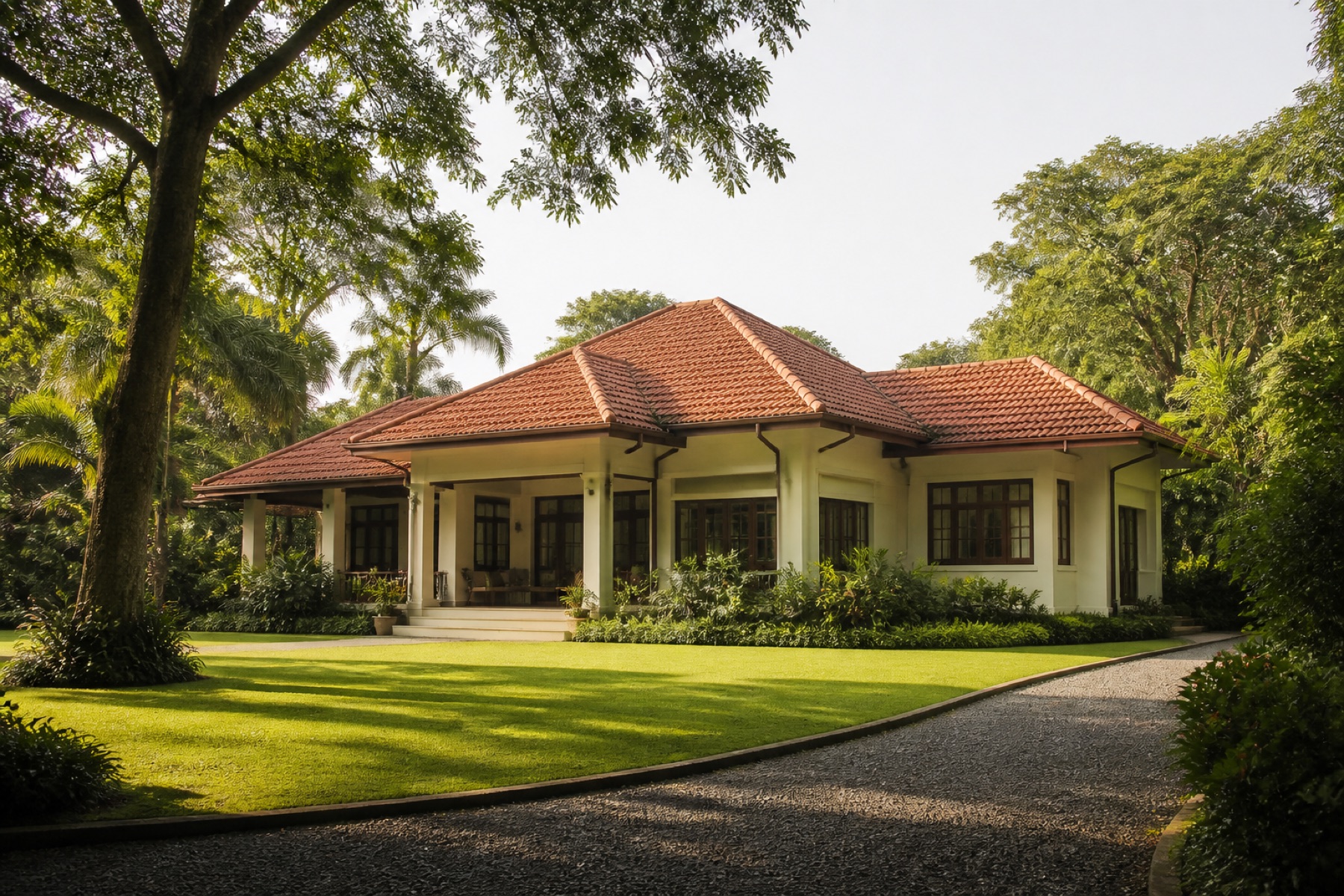
The label describes how the house relates to its plot and neighbours. It does not tell you the tenure, condition, value or permitted redevelopment envelope.
How the form works
Standalone landed house. Generally a larger detached plot. This physical relationship influences where windows can open, how people move between front and rear, and how easily external walls and services can be maintained.
Light, ventilation and privacy
Strong potential, subject to depth and landscaping. Privacy is generally very high, but bedroom orientation, neighbouring windows, boundary walls and the height of surrounding homes can change the experience substantially.
Space and everyday living
Multi-generational households and long-horizon owners. Test the arrival sequence, parking, kitchen-to-garden connection, staircase position and whether the plan provides usable communal space rather than simply a large stated floor area.
Upkeep and future works
High landscape, envelope and systems responsibility. Possible projects range across often substantial renovation or rebuild. Before assuming an alteration or rebuild works, check the structure, party-wall relationship, plot geometry, road access and applicable planning controls.
What to understand before viewing
- Bungalow describes the housing form; it does not automatically mean GCB
- Age and condition can create radically different project scopes
- Slope, drainage, trees and retaining structures may dominate cost
Questions worth asking on site
- What is the condition of the roof and concealed services?
- Does the site require retaining or drainage work?
- Is the existing house worth retaining?