LANDED HOME TYPES

Understand the space.
Choose what suits you.

A practical guide to privacy, daylight, plot relationships, upkeep and the possibilities of Singapore’s main landed-home forms.

CONDITION CATEGORIES

What do CAT 1–4 mean?

CAT 1–4 describes the likely scale of work a particular home may need. It is separate from home type, tenure and location.

CAT 1

Rebuild

Older or original-condition homes where a full rebuild is likely.

CAT 2

Major A&A

Middle-aged homes likely to need substantial additions and alterations.

CAT 3

Light renovation

Newer or substantially rebuilt homes needing minor works before moving in.

CAT 4

Brand new

Newly redeveloped homes offered by a developer, usually at a premium.

A general editorial framework only. A surveyor, architect and relevant authorities should confirm the condition and permissible works for any actual property.
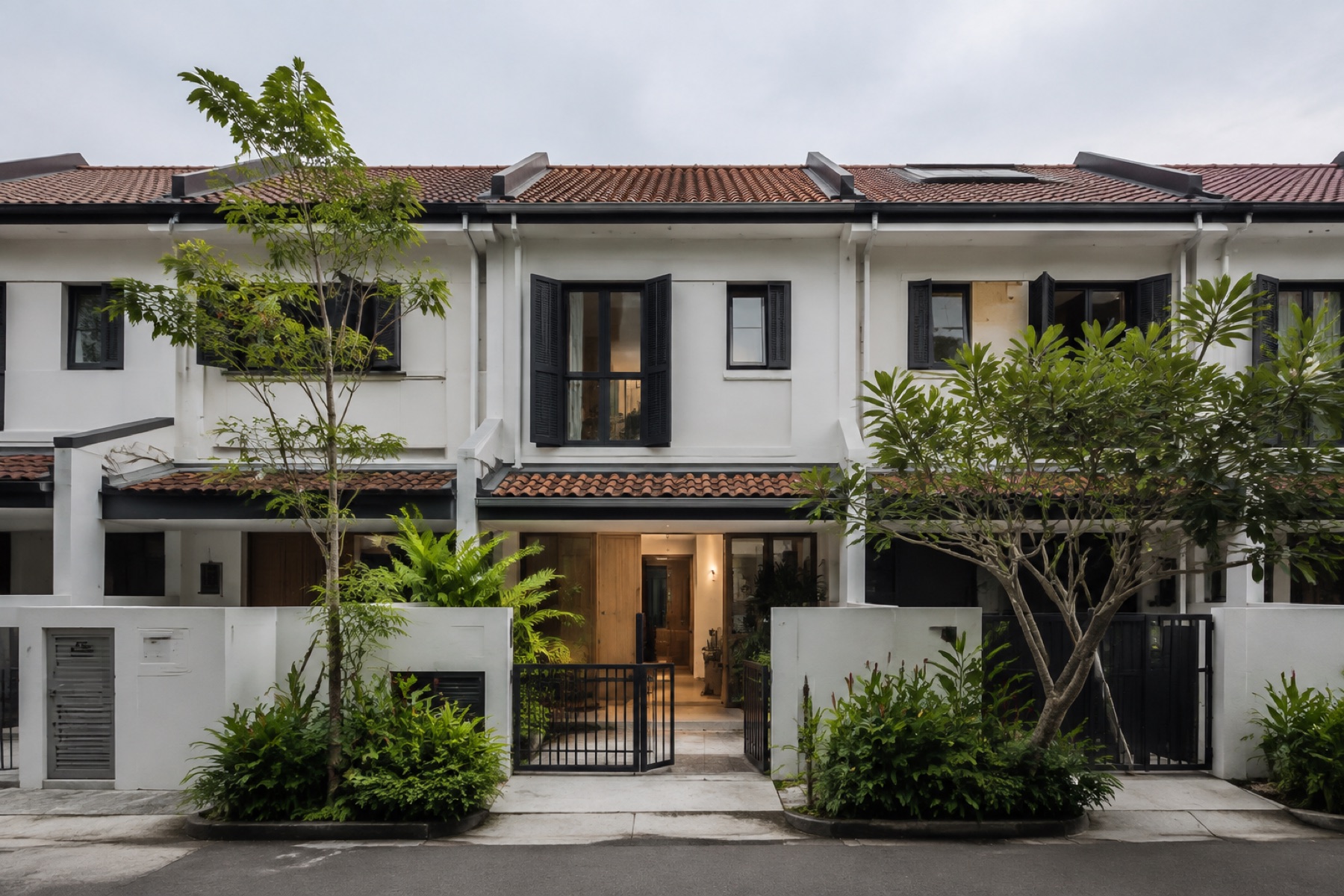
A Singapore terrace house01
CONNECTED LIVING

Terrace House

An efficient landed format with private outdoor space and a strong relationship to the street.
Built form
Shares both side walls
Plot relationship
Compact frontage and private rear space
Privacy
Moderate
Daylight
Usually strongest at the front and rear
Upkeep
Lower external-envelope upkeep
Often suits
Buyers prioritising landed living over side-garden space

What to understand

  • Shared walls reduce side windows, making internal planning important
  • Frontage, staircase position and rear setback influence usable space
  • Check party-wall condition, drainage and access for construction

Questions to ask

  • Does daylight reach the centre of the plan?
  • Can two cars enter without obstructing the street?
  • Is the rear boundary accessible for maintenance?
Read the full Terrace House guide →
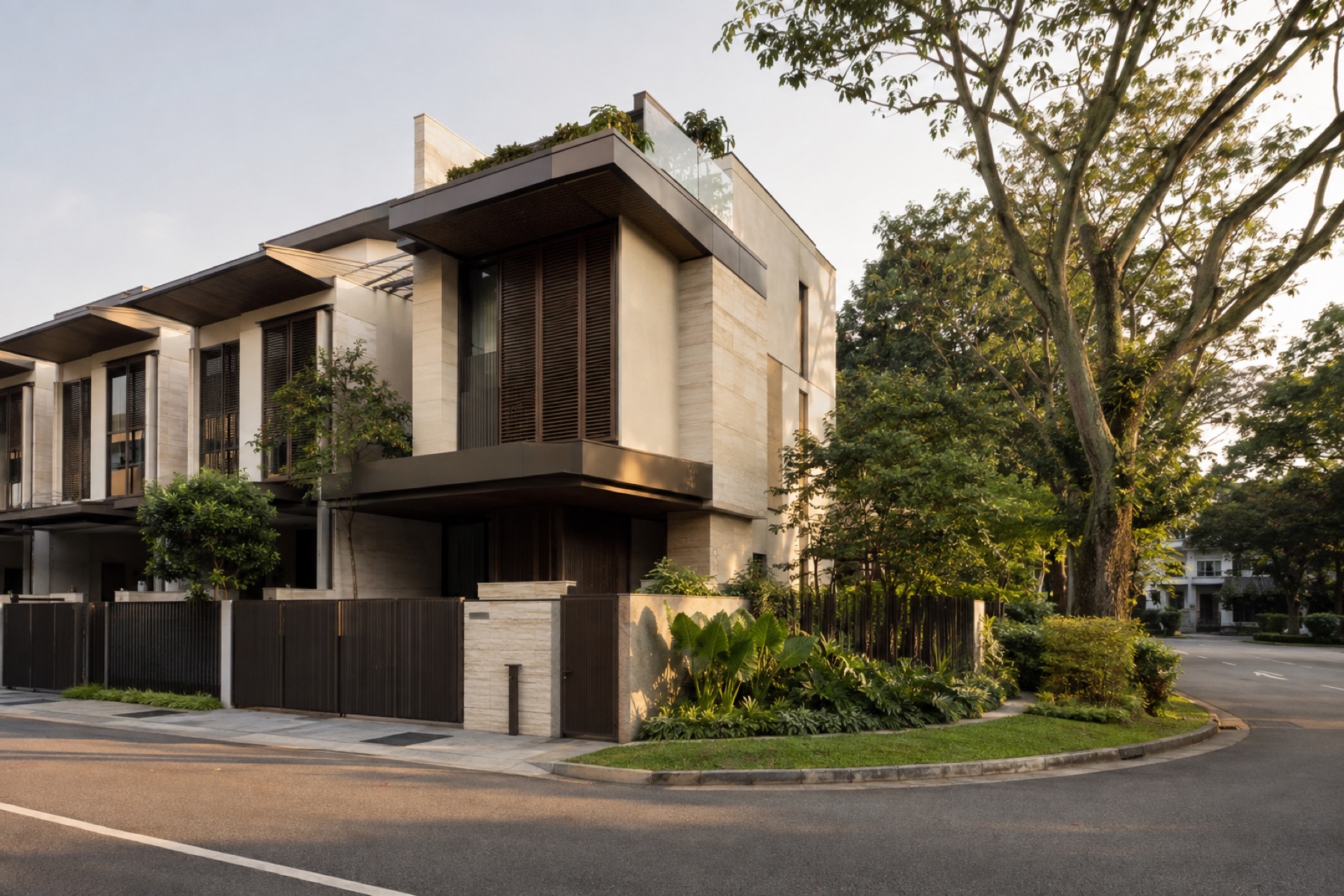
A Singapore corner terrace02
EXTRA SIDE SPACE

Corner Terrace

The familiarity of a terrace house with added light, access and outdoor space along one side.
Built form
End unit with one shared wall
Plot relationship
Additional side setback or garden
Privacy
Good
Daylight
Windows possible along one open side
Upkeep
More façade, garden and boundary to maintain
Often suits
Families wanting terrace efficiency with more breathing room

What to understand

  • The extra land may be setback rather than buildable floor area
  • Road-corner exposure can improve access but reduce privacy
  • Confirm which boundary is the shared party wall

Questions to ask

  • How much of the side land can actually be used?
  • Does corner traffic affect bedrooms or outdoor areas?
  • Where are drains, services and mature trees located?
Read the full Corner Terrace guide →
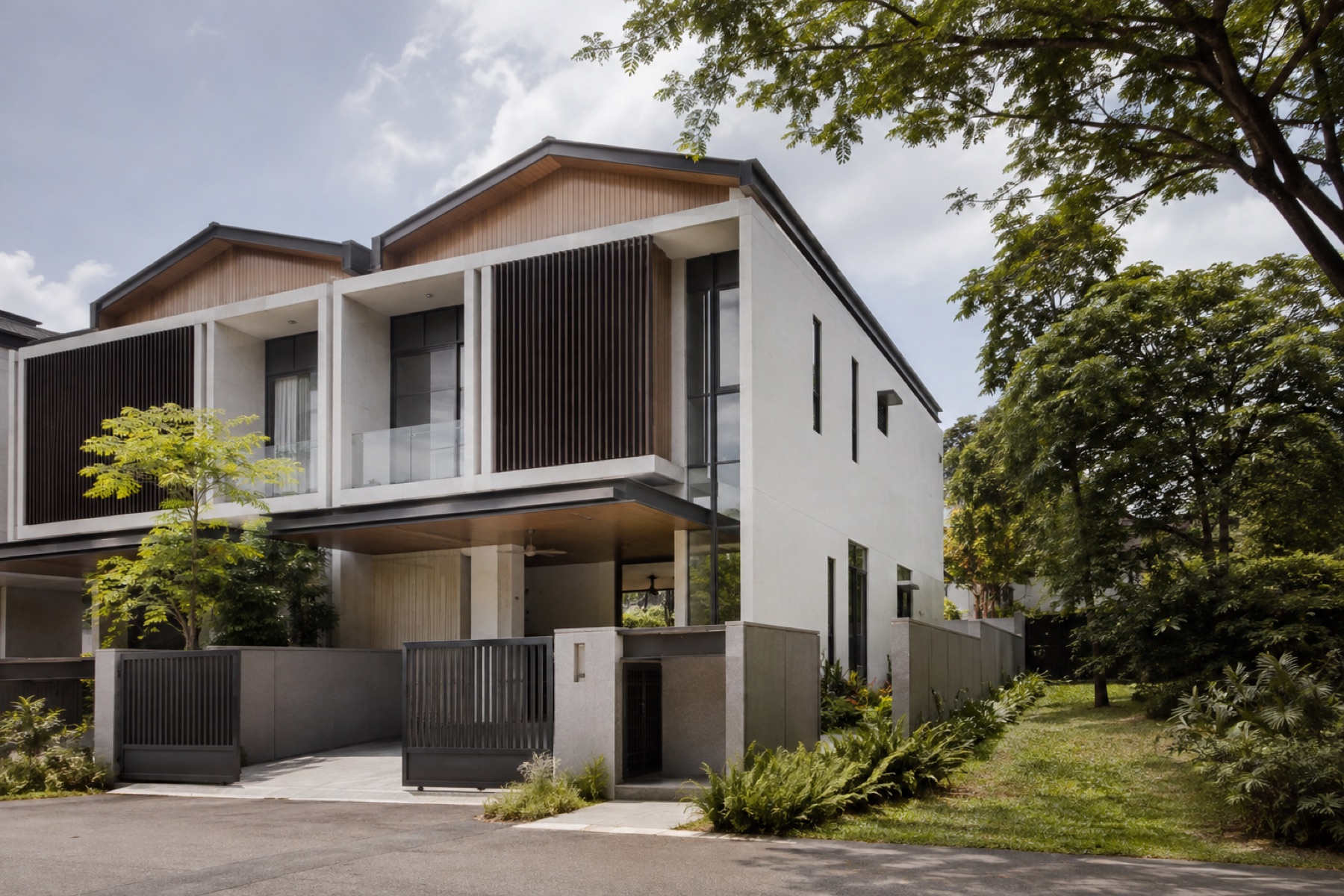
A Singapore semi-detached house03
BALANCED SPACE

Semi-Detached House

A popular balance of frontage, family space and privacy without the land requirement of a detached home.
Built form
One shared party wall
Plot relationship
Broader frontage with one side setback
Privacy
High
Daylight
Good potential from three exposed sides
Upkeep
Meaningful roof, façade and garden upkeep
Often suits
Families balancing space, privacy and manageability

What to understand

  • The relationship with the paired house affects future works
  • An open side supports daylight, ventilation and service access
  • Driveway width matters as much as headline frontage

Questions to ask

  • Are the two halves structurally or visually interdependent?
  • Can works proceed without compromising the neighbour?
  • Is the open side wide enough for useful circulation?
Read the full Semi-Detached House guide →
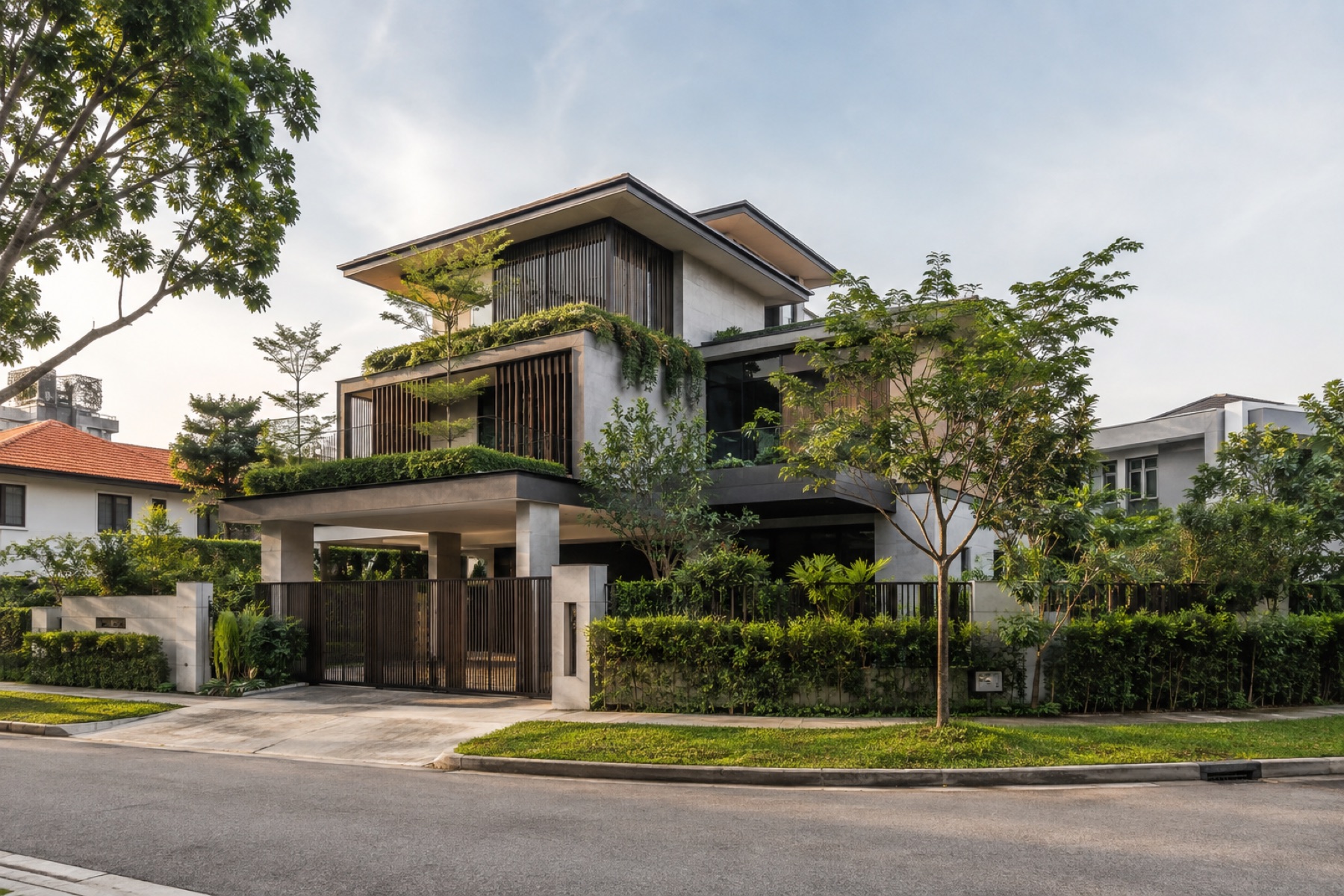
A Singapore detached house04
SPACE ON EVERY SIDE

Detached House

A standalone home with greater design freedom, privacy and circulation around the building.
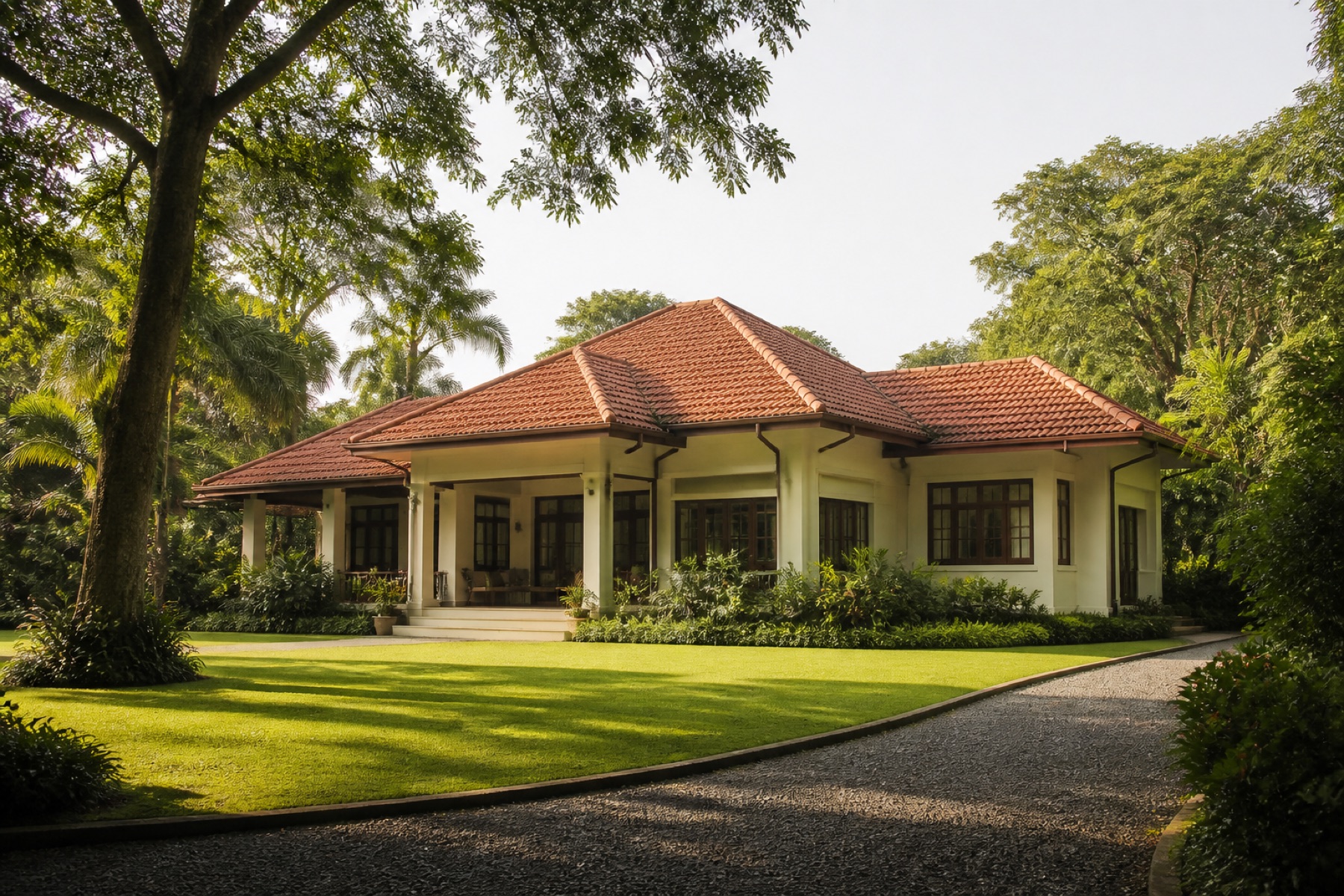
Built form
No shared walls
Plot relationship
Setbacks around the whole building
Privacy
Very high
Daylight
Potential for light and ventilation on four sides
Upkeep
Higher roof, façade, garden and services burden
Often suits
Buyers who value privacy and design flexibility

What to understand

  • Plot shape can matter more than total land area
  • Larger envelopes increase cleaning, repairs and project cost
  • Setbacks and site coverage still constrain the design

Questions to ask

  • Is the plot regular enough for the intended layout?
  • Are all external walls accessible for maintenance?
  • How do neighbouring heights affect privacy?
Read the full Detached House guide →
A Singapore bungalow05
GENEROUS SINGLE HOME

Bungalow

A broad category of detached landed living, valued for privacy, garden space and long-term flexibility.
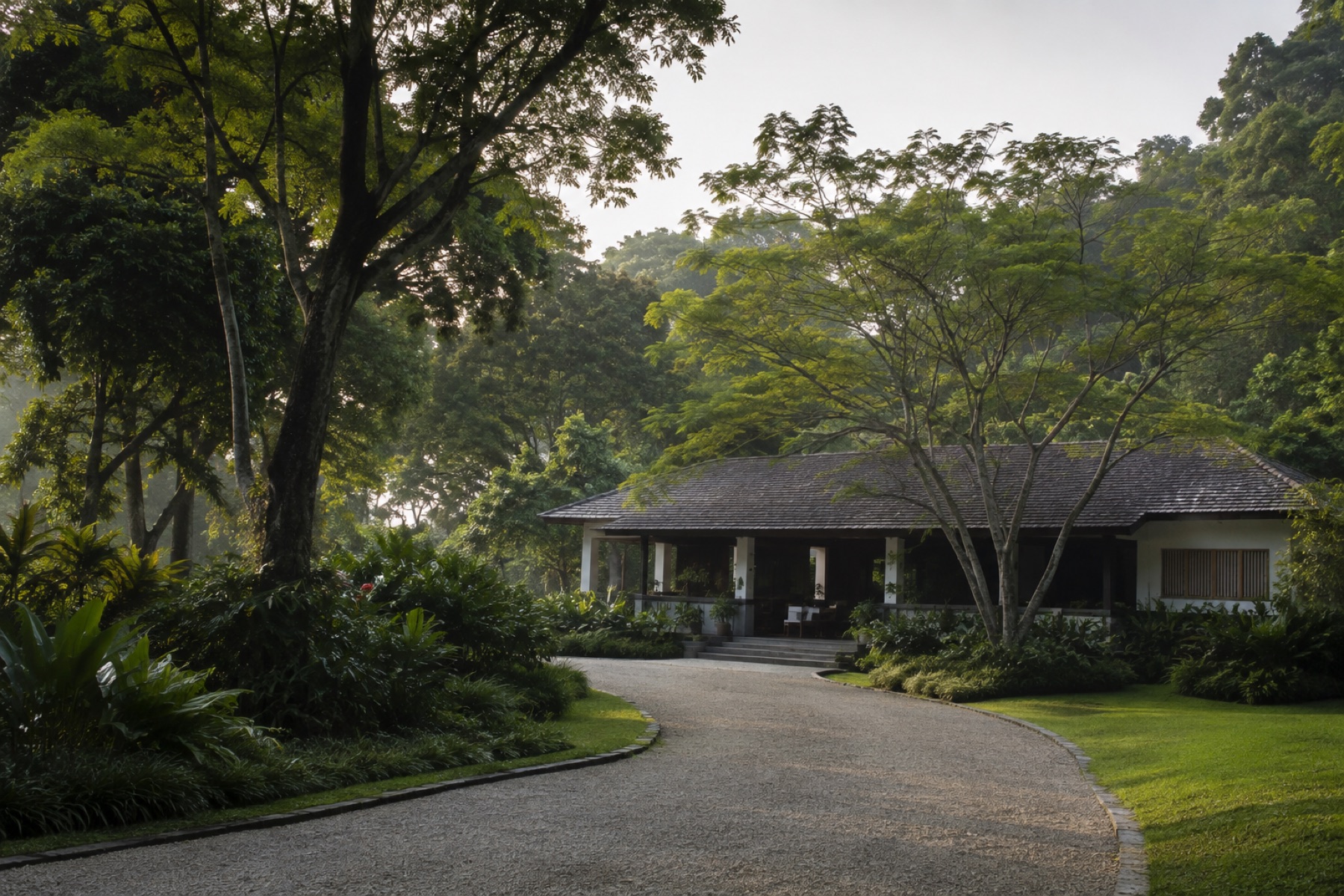
Built form
Standalone landed house
Plot relationship
Generally a larger detached plot
Privacy
Very high
Daylight
Strong potential, subject to depth and landscaping
Upkeep
High landscape, envelope and systems responsibility
Often suits
Multi-generational households and long-horizon owners

What to understand

  • Bungalow describes the housing form; it does not automatically mean GCB
  • Age and condition can create radically different project scopes
  • Slope, drainage, trees and retaining structures may dominate cost

Questions to ask

  • What is the condition of the roof and concealed services?
  • Does the site require retaining or drainage work?
  • Is the existing house worth retaining?
Read the full Bungalow guide →
A Singapore good class bungalow06
PROTECTED LOW-DENSITY LIVING

Good Class Bungalow

Singapore’s most tightly controlled landed form, defined by location and planning requirements—not styling alone.

Built form
Detached home in a designated GCB Area
Plot relationship
Special location and planning controls apply
Privacy
Exceptional
Daylight
Generous separation and landscape potential
Upkeep
Substantial grounds and specialist systems
Often suits
Eligible owners seeking exceptional privacy and permanence

What to understand

  • Only properties within designated GCB Areas qualify
  • Ownership eligibility and planning controls require specialist advice
  • Landscape, site coverage and setbacks are central considerations

Questions to ask

  • Has eligibility been confirmed before negotiations?
  • Do tree and terrain conditions shape the buildable envelope?
  • Has the concept been tested by qualified consultants?
Read the full Good Class Bungalow guide →
ONE MORE DISTINCTION

Home type is not tenure.

A terrace can be freehold, 999-year or leasehold; a detached house is not automatically a bungalow; and a bungalow is not automatically a Good Class Bungalow. Check the title, remaining lease, ownership eligibility and applicable planning controls separately.

INDEPENDENT PROPERTY DISCUSSION

Understand the house
before the offer.

Review the plot, planning context, condition and alternatives with an advisor.

Speak with an advisor →